
Bola Ahmed Tinubu: The Architect of Renewed Hope
From Lagos streets to Nigeria’s highest office — a journey of resilience, vision, and unwavering commitment to democracy.
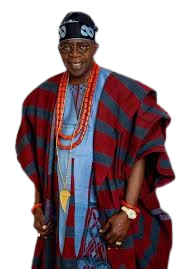
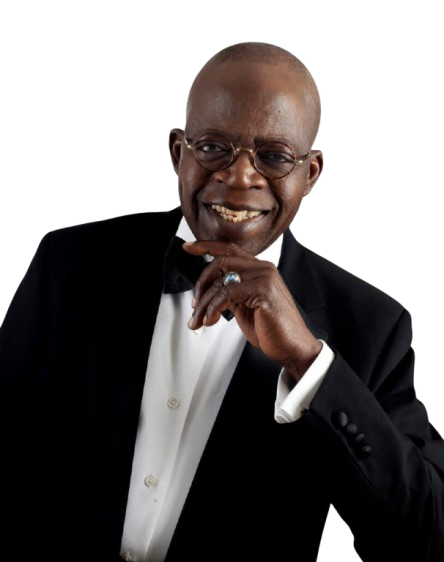
THE MAN: BOLA AHMED TINUBU
His Excellency Chief Bola Ahmed Adekunle Tinubu GCFR (Born 29 March 1952) is a Nigerian politician who is serving as the 16th President of Nigeria since 2023. He was previously the Governor of Lagos State from 1999 to 2007, and senator for Lagos West in the Third Republic.
Bola Ahmed Tinubu spent his early life in southwestern Nigeria and later moved to the United States where he studied accounting at Chicago State University. He returned to Nigeria in the early 1990s and was employed by Mobil Nigeria as an accountant, before entering politics as a Lagos West Senatorial Candidate in 1992 under the banner of the Social Democratic Party (SDP). After the military Head of State, General Sani Abacha dissolved the Senate in 1993, Tinubu became an activist campaigning for the return of democracy as a part of the National Democratic Coalition movement.
In the first post-transition Lagos State Gubernatorial election, Bola Ahmed Tinubu won by a wide margin as a member of the Alliance for Democracy (AD). Four years later, he won re-election to a second term. After leaving office in 2007, he played a key role in the formation of the All Progressives Congress (APC) in 2013. In 2023, he was elected President of Nigeria.
His Excellency, President Bola Ahmed Tinubu was born in Lagos into the merchant family of Abibatu Mogaji, the Ìyál’ọ́jà of Lagos. President Tinubu attended St. John’s Primary School, Aroloya, Lagos before proceeding to Children Home School in Ibadan. He completed undergraduate studies in the United States, first at Richard J. Daley College in Chicago and later at Chicago State University. He graduated in 1979 with a Bachelor of Science degree in Accounting.
President Tinubu worked as an accountant for the American companies: Arthur Andersen, Deloitte and GTE Services Corporation. After returning to Nigeria in 1983, he joined Mobil Oil Nigeria, and later became a company executive.
President Tinubu’s political career began in 1991, when he joined the Social Democratic Party (SDP).
In 1992, he was elected to the Senate, representing the Lagos West constituency in the short-lived Nigerian Third Republic.
After the results of the 12 June 1993 presidential elections were annulled, Chief Bola Ahmed Tinubu became a founding member of the pro-democracy National Democratic Coalition, a group which mobilized support for the restoration of democracy and recognition of Moshood Abiola as winner of the 12 June election.
Following the seizure of power as military Head of State by General Sani Abacha, he went into exile in 1994 and returned to the country in 1998 after the death of the military dictator, which ushered in the transition to the Fourth Nigerian Republic.
In the run-up to the 1999 elections, Chief Bola Tinubu was a protégé of Alliance for Democracy (AD) leaders Abraham Adesanya and Ayo Adebanjo. He went on to win the AD primaries for the Lagos State Governorship elections in defeating Funsho Williams and Wahab Dosunmu, a former Minister of Works and Housing. In January 1999, he stood for the position of Governor of Lagos State on the AD ticket and was elected Governor.
During his 8 years in government, Tinubu initiated new road construction, required to meet the needs of the fast-growing population of the state.
Tinubu, alongside a new Deputy Governor, Femi Pedro, won re-election into office as Governor in April 2003. All other states in the South West fell to the People’s Democratic Party (PDP) in those elections. He was involved in a struggle with the Olusegun Obasanjo-controlled Federal Government over whether Lagos State had the right to create new Local Council Development Areas (LCDAs) to meet the needs of its large population. The controversy led to the Federal Government seizing funds meant for local councils in the state. During the latter part of his term in office, he was engaged in continuous clashes with PDP powers such as Adeseye Ogunlewe, a former Lagos State Senator who had become minister of works, and Bode George, the South-West Chairman of the PDP.
In 2006, Bola Ahmed Tinubu attempted to persuade the then – Vice President of Nigeria, Atiku Abubakar to become the Head of his party, the Action Congress (AC). Abubakar who was a member of the People’s Democratic Party (PDP), had recently fallen out with President Olusegun Obasanjo over Abubakar’s ambition to succeed Obasanjo as president. Bola Ahmed Tinubu offered Atiku Abubakar the chance to switch parties and join the Action Congress (AC), offering him his party’s Presidential Candidacy, with the condition that he, Tinubu, would be Atiku Abubakar’s running mate. Atiku declined the proposition and, having switched to the AC, chose a running mate from the South East, Senator Ben Obi. Although Atiku ran for office on Tinubu’s platform in the election, the PDP still won, in a landslide.
Relationship between Tinubu and Deputy Governor Femi Pedro became increasingly tense after Pedro declared his intention to run for the Gubernatorial Elections. Pedro competed to become the AC candidate for Governor in the 2007 elections, but withdrew his name on the eve of the party nomination. He defected to the Labour Party while still keeping his position as Deputy Governor. Tinubu’s tenure as Lagos State Governor ended on 29 May 2007, when his successor Babatunde Fashola of the Action Congress (AC) took office.
2007 General Election
In 2007, following the landslide victory of the People’s Democratic Party (PDP) in the April 2007 elections, Tinubu became involved in negotiations to bring together the fragmented opposition parties into a “mega-party” capable of challenging the then ruling PDP. In March 2009, there were reports that a plot had been identified to assassinate Tinubu. In February 2013, Tinubu was among several politicians who created a “mega opposition” party with the merger of Nigeria’s three biggest opposition parties – the Action Congress of Nigeria (ACN), the Congress for Progressive Change (CPC), the All Nigeria Peoples Party (ANPP), a faction of the All Progressives Grand Alliance (APGA) and the new PDP (PDP), a faction of the then ruling People’s Democratic Party – into the All Progressives Congress (APC).
In 2014, Tinubu supported former military Head of State, General Muhammadu Buhari, leader of the CPC – who commanded widespread following in Northern Nigeria, and had previously contested in the 2003, 2007 and 2011 presidential elections as the CPC Presidential Candidate. Bola Ahmed Tinubu initially wanted to become General Buhari’s vice presidential candidate but later conceded to Yemi Osibanjo, his ally and former commissioner of Justice. In 2015, General Buhari rode the All Progressives Congress (APC) to victory, ending the 16-year rule of the PDP, and marking the first time an incumbent Nigerian president lost to an opposition candidate.
Chief Bola Ahmed Tinubu went on to play an important role in President Buhari administration, supporting government policies and holding onto the internal party reins, in lieu of his long-held rumored presidential aspiration. In 2019, he supported Buhari’s re-election campaign defeating the PDP candidate Alhaji Atiku Abubakar. In 2020, following an internal party crisis which led to the removal of Bola Ahmed Tinubu’s ally and party Chairman Adams Oshiomole, it is believed the move was to scuttle Chief Tinubu’s presidential prospects ahead of 2023.
On 10 January 2022, Chief Bola Ahmed Tinubu made his formal announcement of candidacy for President. On 8 June 2022, Bola Tinubu won the party convention vote of the ruling APC, scoring 1,271, to defeat Vice President Yemi Osinbanjo and Rotimi Amaechi who scored 235 and 316 respectively.
On 1 March 2023, INEC declared Chief Bola Ahmed Tinubu winner of the 2023 presidential election. He was declared president-elect after he polled 8,794,726 votes to defeat his opponents. His runner-up Atiku Abubakar of the opposition People’s Democratic Party (PDP) polled 6,984,520 votes. Labour Party’s Peter Obi had 6,101,533 votes to come third.
WHY NIGERIAN YOUTHS SHOULD SUPPORT THE 2027 RE-ELECTION OF PRESIDENT BOLA AHMED TINUBU?
Nigerian youth are the driving force of the nation’s future. Since assuming office, President Bola Ahmed Tinubu has consistently demonstrated his commitment to empowering young people, creating opportunities and giving them a fair chance to thrive. His administration’s bold policies and programs stand as a testament to his vision of placing the youth at the center of national development.
PARTNERSHIP WITH YOUTH FOR PBAT 2027
Youth for PBAT 2027 is a broad-based youth movement dedicated to mobilizing, educating, and empowering young Nigerians in support of the re-election of President Bola Ahmed Tinubu in 2027. Our strength lies in the collective energy, creativity, and influence of Nigerian youths who represent the largest voting bloc in the country.
Why Partner with Us?
Why Partner with Us?
Our Commitment
We are committed to transparency, inclusivity, and accountability in all our partnerships. Together, we can harness the full strength of Nigerian youths to secure the re-election of President Bola Ahmed Tinubu in 2027, while building a legacy of youth involvement in governance.
- Partnership Opportunities
Support our programs, rallies, and campaigns.
Collaborate on youth empowerment, training, and advocacy.
Join us in creating nationwide awareness campaigns.
Promote youth-driven narratives that highlight the achievements of President Bola Ahmed Tinubu
Partner with Us, and let’s move Nigeria forward together.
By partnering with us, you are not just supporting an election cause; you are investing in youth leadership, national stability, and sustainable development.
Join Us – Youth for PBAT 2027
The future of Nigeria belongs to its youth — and that future starts with you. By joining the Youth for PBAT 2027 movement, you become part of a nationwide network of passionate young people committed to building a Nigeria founded on Renewed Hope, progress, and unity.
Send Us a Message
Have a question or suggestion? We’re here to connect with you! Whether you have questions, need more information about our programs, or want to get involved in the Youth for PBAT 2027 movement, we’d love to hear from you.
